The post More than one third of primary school staff say their students vape, study reveals appeared first on Push Cartridges.
]]>A massive 84 per cent of teachers and staff working at high schools say some of their students use e-cigarettes, according to the George Institute for Global Health research.
The study, which has been published in the Australian and New Zealand Journal, surveyed 196 Australian teachers and staff online to investigate reports that vaping is increasing among primary school students.
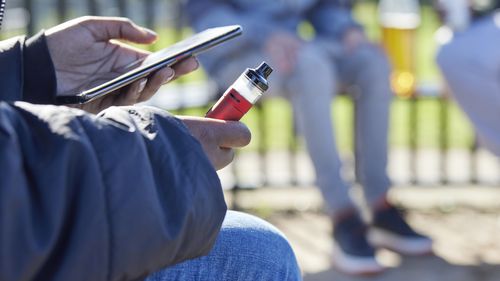
One of the authors, Professor Simone Pettigrew, said the results discovered were alarming.
“Our study shows some concerning trends in e-cigarette use in Australian schools – particularly primary schools – that need to be nipped in the bud to prevent future harm,” she said.
“Our study suggests many Australian students can readily access e-cigarettes and that vaping in schools is becoming more prevalent, including in primary schools.
Half of the teachers and school staff reported noticing an increase in students vaping in the past two years, while 78 per cent of the teachers and staff said they were either concerned or very concerned about the rise in students vaping.
The report found that primary school students tended to get e-cigarettes from their siblings or to take them from home without permission, according to the teachers and staff.
READ MORE: Sydney school worker charged for faking her COVID-19 vaccination status

Have you got a story? Contact Serena at [email protected]
“Secondary school aged children were reported to be more likely to get someone else to buy for them, receive them from a friend aged over 18 or via the Internet,” Professor Pettigrew said.
While there appears to have been an increase in vapes being used at school, only one-third of teachers and staff surveyed reported their schools had a vaping policy or provided vaping-prevention education for students.
Professor Pettigrew said more needed to be done to stop students vaping.
“School staff need greater support to address student e-cigarette use and prevent the negative consequences associated with vaping by children at school and beyond,” she added.
“But it’s not just a problem for schools – communities and governments also need to take note of this growing trend and take steps to protect young people from vaping harms.”
Of the teachers and staff surveyed, 57 per cent were from New South Wales or Victoria, while 28 per cent were from schools outside metropolitan areas.
The post More than one third of primary school staff say their students vape, study reveals appeared first on Push Cartridges.
]]>The post Juul to pay $438.5m in youth marketing probe appeared first on Push Cartridges.
]]>The deal with more than 30 states also restricts Juul’s marketing, for example barring use of people under the age of 35 in its adverts.
Juul called the settlement “a significant part” of its efforts to resolve “issues from the past”.
The firm is also fighting a US ban of its products.
The US Food and Drug Administration in June said it would bar sales of Juul products due to insufficient data about the health impact. The measure is on hold while the company appeals the decision.
It continues to face litigation in some other states, as well as private lawsuits brought by individual families and others.
Juul said the terms of Tuesday’s settlement were in line with its marketing practices since a “company-wide reset” in the fall of 2019 and that it was “focused on the future”.
“We believe that once the FDA does a complete review of all of the science and evidence presented, as required by law, and without political interference, we should receive marketing authorization,” the firm said in a statement.
Juul was widely blamed for the explosive growth in teen vaping. More than a quarter of high schoolers used e-cigarettes in 2019, according to a federal survey, though that share has since subsided.
The investigation into Juul’s marketing found that the company had “relentlessly marketed vaping products to underage youth” even though such purchases are illegal in the US, said Connecticut attorney general William Tong, who announced the settlement on Tuesday.
He said the company had also used age verification practices it knew were ineffective and did not clearly disclose that its pods contained nicotine, which is addictive.
“Juul’s cynically calculated advertising campaigns created a new generation of nicotine addicts,” he said.
Money from the settlement will be paid out over six to 10 years and is to be used to combat tobacco use. more bbc news
The post Juul to pay $438.5m in youth marketing probe appeared first on Push Cartridges.
]]>The post More vapers are making their own juice, but not without risks appeared first on Push Cartridges.
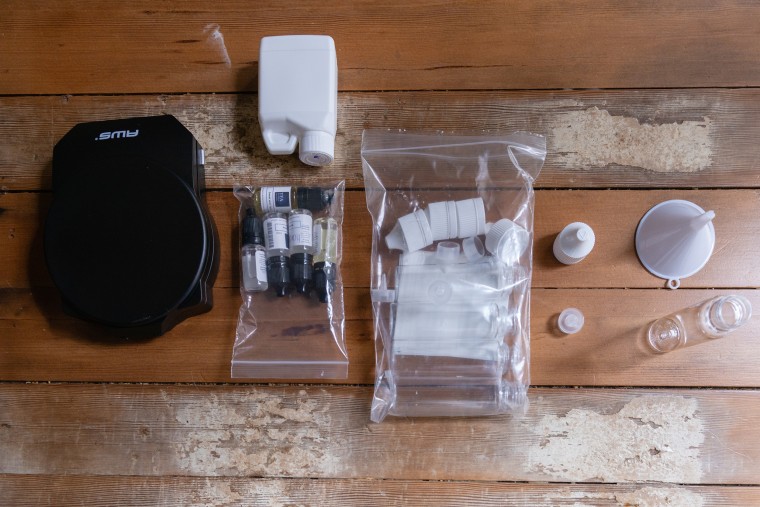
]]>MENLO PARK, CALIF. — Danielle Jones sits at her dining room table, studying the recipe for Nerd Lyfe (v2) vape juice. The supplies she’s ordered online are arrayed before her: a plastic jug of unflavored liquid nicotine, a baking scale and bottles of artificial flavors that, combined, promise to re-create the fruity taste of Nerds Rope candy in vapor form.
This is Jones’ first attempt to make her own e-liquid after buying it for the past five years. Jones, 32, wants to be prepared for the worst-case scenario: a ban on the sale of the e-liquids she depends on to avoid cigarettes.
“Even though I haven’t touched a cigarette in five years, the pull is always there. It’s so easy to go and buy a pack. And I don’t want to do that,” she said. “The only route I can see going forward if there is a ban is to try to create the product myself at home.”
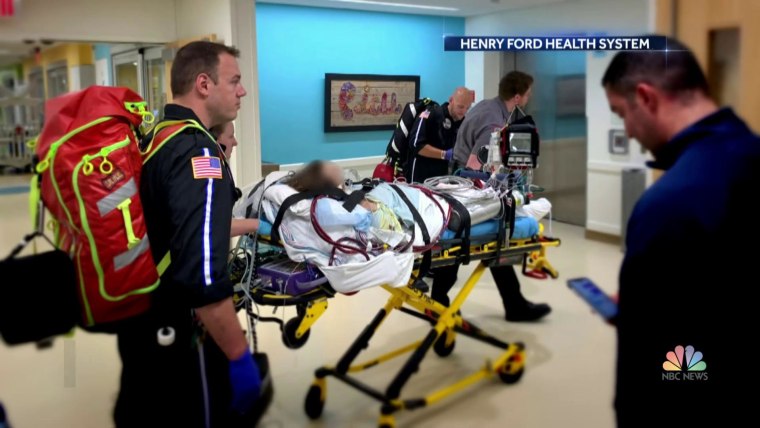
As more states, cities and even the federal government consider banning flavored nicotine, thousands of do-it-yourself vapers like Jones are flocking to social media groups and websites to learn how to make e-liquids at home.
Users on the forums — many of whom have been mixing their own e-liquids for years — describe the process as simple, fun, cheap and, with the proper precautions, safe. But if not done carefully, making e-liquids at home may pose risks including accidental exposure to high doses of liquid nicotine, the use of dangerous oil-based flavors and possible product contamination.
“To have people mixing their own e-cigarette liquid is crazy. These are very toxic chemicals,” said Stanton Glantz, a professor of medicine and the director of the Center for Tobacco Control Research and Education at the University of California-San Francisco. “If you drop a little bit of nicotine on your skin, it can send you to the hospital.”
But Dr. Michael Siegel, a professor of community health sciences at Boston University, said many people are able to make vaping liquids safely at home, by seeking advice from other vapers and following a few safety measures, such as wearing gloves and goggles.
Siegel worries, however, about the risk of contaminated products as some people use the bans as an opportunity to make their own concoctions cheaply and sell them on the black market.
What are Dank Vapes? CDC links these products to vaping illnesses
“Who knows what they’re going to put in there?” Siegel said. “This is just what happens when you use prohibition as a regulatory approach. What’s really needed in this situation is actual regulation of these products to try to make them as safe as possible.”
Michigan, Massachusetts, New York, Utah and Rhode Island have passed emergency rules to restrict the sale of e-cigarettes in response to the recent outbreak of vaping-related illnesses, which had sickened 2,051 people and killed 39 as of Nov. 5, according to the Centers for Disease Control and Prevention. In a potentially significant breakthrough, the CDC on Friday said it had identified a link between the mysterious outbreak and vitamin E acetate, an ingredient sometimes added to marijuana-based vaping products.
An additional 220 localities, including San Francisco and Los Angeles County, have passed restrictions on the sale of flavored tobacco products, according to the Campaign for Tobacco Free Kids. Details of an expected federal ban have not been released.
Following a rush of new bans in September, a Reddit forum on DIY e-juice saw a spike in membership, the group’s moderator reported. The daily number of new subscribers had long hovered around 30; that number spiked to 336 new subscribers in a single day, followed by more than 200 the next day, and it remained high throughout the month.
The group now has over 52,500 members sharing recipes for flavors such as white chocolate chip cookie, discussing how to make a watermelon that doesn’t taste “soapy,” and asking for tips on how to store supplies safely. Thousands of recipes for e-liquids in myriad flavors can be found in such forums and elsewhere on the internet.
Mike Olson, a resident of Illinois, has stockpiled a multiyear supply of highly concentrated nicotine because he’s so worried about a ban on the sale of flavored vapes. He said he uses gloves and safety goggles while handling it and stores it high up in a closet to keep it away from his dogs.
Get the Morning Rundown
Get a head start on the morning’s top stories.SIGN UPTHIS SITE IS PROTECTED BY RECAPTCHA PRIVACY POLICY | TERMS OF SERVICE
Not everyone, however, is so scrupulous about safety. A member of the Reddit group, for example, recently posted that he had accidentally sprayed liquid nicotine into his eyes as he tried to remove it from a vial with a syringe. He said his eyes were stinging and turned bright red within a minute, but he washed them out repeatedly. Other members responded with warnings to use protective equipment.
Poison control centers have received 3,583 calls about exposure to e-cigarette devices and liquid nicotine so far this year, as of Sept. 30, according to the American Association of Poison Control Centers. About 50 percent of the calls are for children 5 years or younger
Many of the safety risks of DIY vaping also apply to commercial products. The safety of inhaling food flavorings, for example, has not been established, even in commercially manufactured e-liquids. The Flavor and Extract Manufacturers Association certifies flavored liquids for safety — but only when they are used in food, said John B. Hallagan, a senior adviser to the industry group.
But the U.S. Food and Drug Administration does regulate commercial vaping products to some extent. And while critics say regulation has been inadequate, the agency has nonetheless conducted thousands of inspections of e-cigarette manufacturers and retailers. DIY e-liquids made at home for personal use do not fall under FDA jurisdiction.
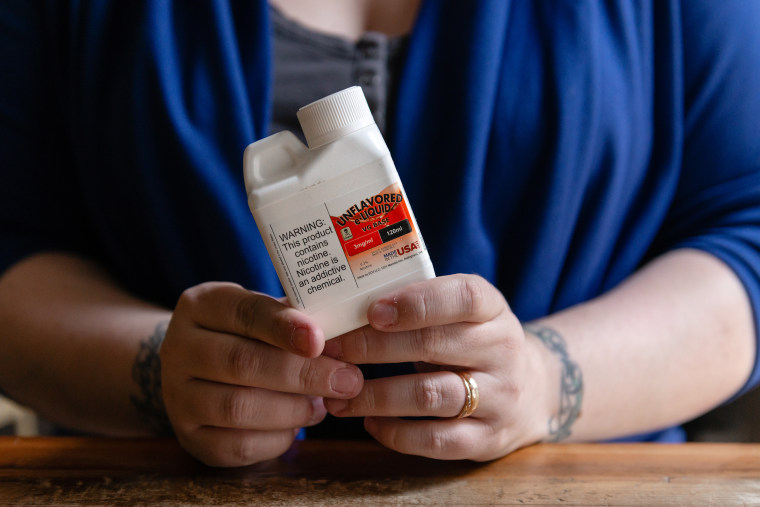
Alex Clark, CEO of the Consumer Advocates for Smoke-Free Alternatives Association (CASAA), said he plans to warn the nonprofit’s more than 200,000 members about the dangers of making e-liquid at home.
Clark notes that people should not use flavors found in the baking aisle of a grocery store, such as peppermint oil and lemon extract, because heating and inhaling them can cause lipoid pneumonia, which is potentially life-threatening.
Though a first-time DIY-er, Danielle Jones may have better access than many people to advice on making e-juice safely at home. She works for a company that manufactures the cotton wicking used in vaping devices, sits on the board of CASAA and hosts a YouTube Live show about vaping.
Jones wants to make the process as simple as possible.
She went online to purchase unflavored nicotine that had already been mixed with additives and diluted to her desired concentration. All she needs to do is add the flavors, also purchased online
Juul stops selling mint ahead of anticipated flavor ban
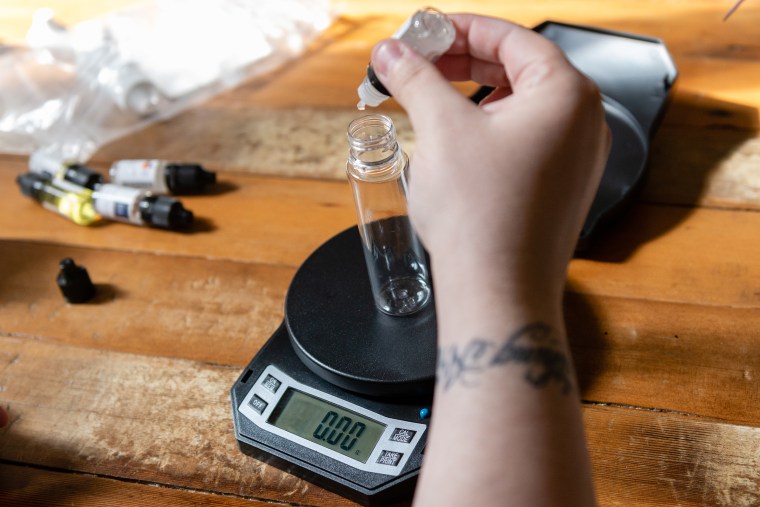
“This is complicated,” Jones says, consulting the Nerd Lyfe recipe, which calls for a mix of five flavors: Dragonfruit, Marshmallow, Rainbow Drops, Red Licorice and Sweet and Tart. She opens each bottle and carefully squeezes out a few droplets at a time, her gray hair pulled safely out of her eyes into a loose topknot.
Next comes the nicotine, which resembles a doll-sized plastic jug of gasoline. As she peels off the seal, she gets a little of it on her fingers. But that does not worry her: “This is the same as my commercially available product, and I get that on my fingers all the time.”
The whole process takes Jones about 15 minutes, and the solution is ready to vape. She heads out into her garden, gives the bottle a final shake and squeezes some into her iridescent purple device.
She takes a deep hit, great clouds of vapor billowing out of her nose and mouth. The air smells candy sweet, like inhaling a box of Nerds
The post More vapers are making their own juice, but not without risks appeared first on Push Cartridges.
]]>The post Weed vapes with vitamin E gained popularity on social media, possibly driving illnesses appeared first on Push Cartridges.
]]>The compound, an oil called vitamin E acetate, was described in online tutorials as a way to dilute bootleg THC vapes, the Centers for Disease Control and Prevention said Friday.
The illnesses, called EVALI, or e-cigarette or vaping product use associated lung injury, have now sickened 2,506 people and killed at least 54 nationwide.
A CDC analysis of emergency room visits showed that the onset of the outbreak was sudden, suggesting a change in what people were vaping around that time. The analysis found that ER visits for vaping problems sharply increased beginning in June, and peaked in September. Although doctors continue to report cases, the numbers now are declining.
The CDC published its analysis, along with three other reports detailing ongoing investigations of EVALI, on Friday.
A majority of patients reported using vaping products with THC, the main psychoactive component of marijuana, bought off the street or from friends.
And a growing body of evidence points to vitamin E oil as a likely culprit in what’s made people sick.
“We are confident that vitamin E acetate is strongly linked to the EVALI outbreak,” Dr. Anne Schuchat, principal deputy director at the CDC, said on a call with reporters. The CDC analyzed samples of lung fluid from 51 EVALI patients; 48 contained vitamin E acetate. By contrast, none of the lung fluid samples taken from 99 healthy people had vitamin E.
Vitamin E acetate has a consistency that is much like pure THC oil: thick, goopy and viscous. Officials think it was used as a way to dilute THC products.
It’s unclear how vitamin E acetate might harm the lungs, but investigators have a few theories. Schuchat said that particles from the oil could disrupt a coating in the lung necessary for normal breathing. Additionally, when vitamin E acetate is heated to a very high temperature, it creates a byproduct called ketene, which could irritate the lungs.
Still, the findings do “not mean that there are not other substances in e-cigarettes or vaping products that have or are capable of causing lung injury,” Schuchat said. “We know that a persistent but small proportion of EVALI cases do not report the use of THC-containing vaping products.”
Schuchat told reporters it appears that no single dealer or vape producer was behind all of the bootleg products, but that online tutorials encouraging the addition of vitamin E acetate in DIY vape products could have contributed
“I do believe there were social media factors that likely played a role,” Schuchat said.
Also Friday, the Food and Drug Administration and the Drug Enforcement Administration announced the seizure of 44 websites that advertised the sales of illegal THC vape products. Those websites were discovered as part of “Operation Vapor Lock,” which included interviews with EVALI patients and their families.
However, there has been no definitive link between products listed on those websites and EVALI illnesses. Some sites appear to be fraudulent sites that processed payments, but never delivered products.
“It is a federal crime to advertise the sale of illicit THC vaping cartridges online,” Dr. Stephen Hahn, the newly appointed FDA commissioner, wrote on the agency’s website. “By seizing these websites today, we are able to focus on other online and in-person sources of illegal and potentially dangerous vaping products.”
Lung illness complications
The CDC reports also looked at EVALI patients who were discharged from the hospital, but then re-admitted because of complications. Those patients tended to be over age 50, and also suffer from chronic conditions, such as heart disease, diabetes, sleep apnea and other respiratory illnesses.
Doctors are now advised to follow up with patients within 48 hours after going home from the hospital.
“It is important that physicians and clinical providers work with EVALI patients to ensure follow-up care within two days,” CDC Director Dr. Robert Redfield said in a news release. “Ensuring this timely medical attention and monitoring can save lives.”
People who vape are encouraged to monitor themselves for EVALI symptoms: extreme fatigue, weight loss, cough, trouble breathing, fever, vomiting and diarrhea. More on NBCnews
The post Weed vapes with vitamin E gained popularity on social media, possibly driving illnesses appeared first on Push Cartridges.
]]>